
All 24 industry reel generators
UGC ads for supplement brands
In the supplement aisle, the quickest way to lose an ad account is a script that promises results. UGC ads for supplement brands have to hold a narrow line — first-person, believable, and containing no health claims whatsoever — and ReelSeconds approaches that line from the routine side: you type what the product is and the moment it belongs to, and the script stage writes about the habit, never the outcome.
From that single line, four automatic stages produce the whole ad: a written on-screen hook, a recorded voiceover with word-level timestamps, continuous 9:16 footage generated from a visual prompt, and an in-browser assembly that burns the captions onto the real timings and downloads a vertical MP4. The generator panel on this page is preset for supplement DTC.
Make a supplement brands reel now20 free credits when you sign up — around two reels to test the register, no card asked.
UGC ads for supplement brands fail on the script, not the footage
Ask anyone who has run supplement creative at volume where the trouble starts and the answer is rarely production values — it is wording. "Cured my bloating." "Fixed my sleep in a week." "You'll feel the difference by day three." Creators write lines like these because they convert, platforms and regulators reject them because they are health and results claims, and the brand is the one left holding the disapproved account. Every round of creator sourcing reopens the same negotiation about what may and may not be said.
The register that survives is the routine. Not what the product does to a body — what it does to a morning. Where it sits on the counter, when it gets taken, what the restock ritual looks like, how it fits between the coffee and the school run. That is genuinely first-person, it is watchable, and it asserts nothing a regulator could parse as a promise. Because the scripts here are generated from a brief about the moment rather than the effect, they start life on the right side of that line instead of having to be edited back across it.
That framing is the actual product on this page. The pipeline is the same four stages ReelSeconds runs for any industry; what makes it worth a supplement brand's time is that the writing begins claim-free by construction, and that you read every word before a single frame is rendered. Set that against the usual workflow — brief a creator, receive a script full of promises, negotiate the promises out, hope the delivered cut matches the agreed text — and the appeal is less about speed than about starting from safety instead of retreating to it.

Three routine scripts that carry the whole category
Routine-led does not mean vague. The strongest ads in this register are specific to the point of banality — the exact shelf, the exact hour, the exact sequence of a real person's day. Specificity is what makes first-person narration believable, and believability is the entire currency of the UGC format. A brief like "greens powder, taken at 7am before the gym bag gets packed" will always out-perform "premium wellness supplement" as raw material. The detail is doing the persuading, and detail costs nothing to supply.
In practice, most supplement DTC accounts can run for months on rotations of three script shapes, refreshed with new details and openings as they tire. Each shape stays inside the routine register, each hands the footage model a concrete scene to render, and each leaves the closing CTA a natural place to land. Swap the time of day, the room, the season or the person implied behind the voice, and one shape quietly becomes a dozen distinct ads without a single new decision about what may be said.
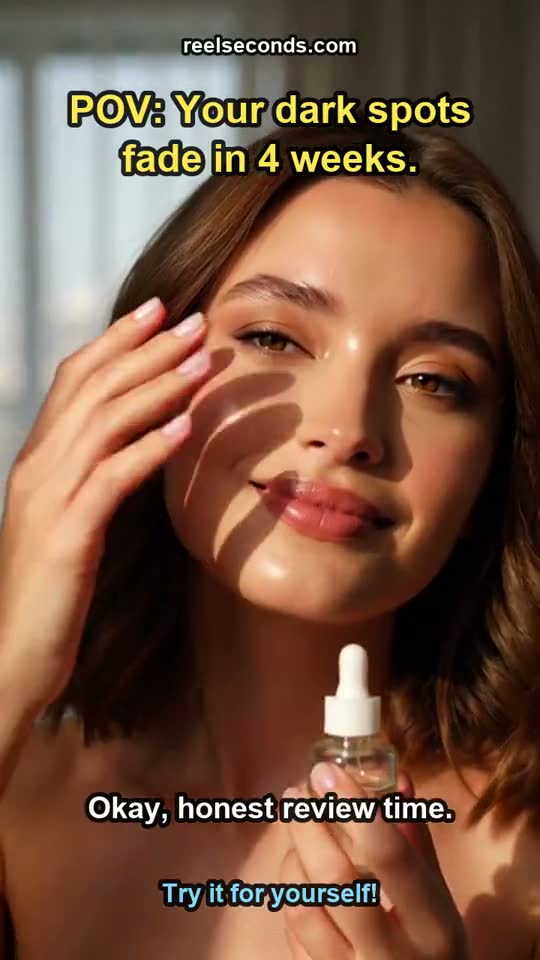
- The counter at 7am. A morning inventory told in first person — kettle, vitamins, the tub with the scoop in it. The product earns its place by being part of the furniture, not by claiming anything.
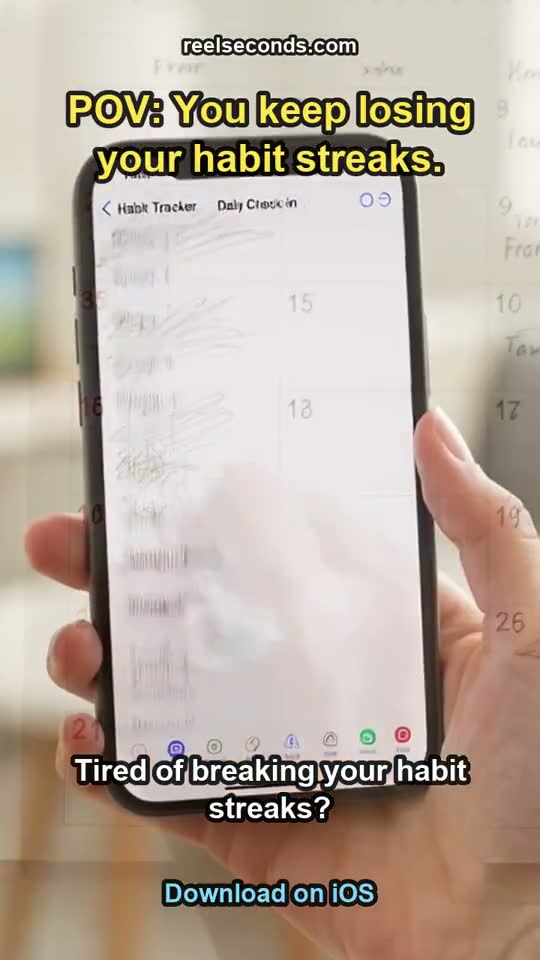
- The habit that finally stuck. Narration about consistency itself: the streak, the spot next to the toothbrush, the trick that made remembering easy. Behaviour is yours to describe; biology is not.
- The restock moment. Running low and reordering is the quietest possible endorsement — it implies continued use without asserting a single effect. It also sets up the closing CTA naturally.
What this is not: a creator, a testimonial, or a compliance department
Honesty about the format, because in this category the details are load-bearing. There is no human creator in these reels: the voice is AI (Jackson, Michael or Candy) and the footage is AI-generated b-roll matched to your described scene. The result reads as UGC-style — the pacing, the first-person voice, the vertical frame — but it is not user-generated content in the literal sense, and it must never be captioned or presented as a real customer's testimonial or review. Run it as what it is: a produced ad in a native format.
The footage limitation follows from the same fact. A generated shot of a kitchen counter will be convincing; a generated shot of your bottle will not carry your actual label, and should not be relied on to. Keep pack accuracy in real photography and let these reels do scene and voice. And if your strategy depends on whitelisting real creators' accounts or building a library of genuine customer content, this is the wrong tool for that job — it makes ads, not relationships.
Finally, script approval is a checkpoint, not a legal opinion. The routine framing keeps drafts away from claims, but no generator knows your formulation, your market's labelling rules, or what your counsel has cleared. Whatever review process your ads pass through today, these should pass through it too — the difference is that they arrive there already written in the survivable register, so reviewers spend their time confirming the absence of claims rather than excising them — a shorter and far less contentious meeting.

More reels from the same pipeline
The exact studio behind this page also made these — different topics, one workflow. Each is a real generation, labelled with the prompt topic it came from.
From one typed line to a routine-led reel
- 01
Name the product and the moment, never the promise
The brief that works is "collagen sachet, stirred into the first coffee at 6:45" — a product and a time-and-place. The supplement preset in the panel on this page steers the script stage toward routine framing from the start.
- 02
Vet the wording while it is still text
Back come three artifacts: the on-screen hook (written, never spoken), the first-person narration, and the visual prompt. Read them the way your reviewer would. If anything smells like an outcome claim, fix the brief and regenerate — no credits have gone to footage yet.
- 03
Give it a first-person voice
Pick between Jackson's energetic read, Michael's calm one and Candy's warm one, matching whoever your buyer imagines on the other side of the ad. The recording captures word-level timestamps that the caption pass will use exactly.
- 04
Let the scene render
The text-to-video stage turns the visual prompt into continuous 9:16 footage — the counter, the gym bag, the morning light. Expect one to three minutes, and know that a failed render refunds its credits automatically.
- 05
The browser cut: captions, hook, CTA, download
Assembly happens on your machine — captions burned in on the true word timings, hook overlay up top, closing CTA and audio mux — and finishes in under a minute for a 15-second reel. A 9:16 MP4 lands in your downloads folder.
Questions supplement founders actually ask
- Is there a real person or customer in these reels?
- No, and you should never imply there is. The voiceover is an AI voice and the visuals are AI-generated b-roll matched to your description — no creator was sourced, no customer filmed anything, and your actual bottle is not on camera. The format borrows the pacing and first-person voice of UGC; presenting it as a genuine testimonial or review would be dishonest and is exactly the kind of thing this category gets punished for.
- How does it keep health claims out of my ads?
- By where the writing starts, and by where you sit in the pipeline. Scripts are generated from a routine brief — the moment, not the effect — so drafts describe habits rather than outcomes. You then approve the full text before any rendering spends credits. What it does not replace is your regulatory review: UGC ads for supplement brands still need to pass whatever sign-off your other creative passes, and the tool has no opinion on your formulation or market.
- Do I need product photography or existing footage first?
- No. The reel is generated end to end from your typed brief, so a brand with zero assets can produce a finished ad today. The honest caveat: generated footage will not reproduce your label or packaging accurately, so anything that requires the real product on screen — marketplace listings, pack-shot ads — still needs conventional photography. These reels sell the routine, not the artwork.
- What is the credit maths per ad?
- Ten credits buys a standard 15-second reel. The HD visual base (Kling) is 25 credits, and extending to the 30-second cap adds another 10. Runs that fail refund themselves without a support ticket. Sign-up includes 20 free credits — roughly two reels, which for most brands is one throwaway test and one keeper.
- What separates the free output from the paid output?
- Two things: the corner of the frame and the paperwork. Free-tier reels carry a small reelseconds.com watermark, which is acceptable for internal review and register-testing but not for anything customer-facing. Paid plans remove it and export under a commercial licence, which is what you want in place before the reel goes into an ad account.
- Which placements is the file actually built for?
- The export is a native 9:16 vertical MP4 — the exact shape Instagram Reels, TikTok, YouTube Shorts and vertical paid placements take without letterboxing. Captions are burned in on the voiceover's real word timings, so the ad still communicates when it autoplays muted, which in practice is most of the time.

Start free, upgrade when it pays off
Every account starts with 20 free credits — about two supplement brands reels, no card required. A standard reel is 10 credits; paid plans run $9.99 Starter to $79 Studio. See the full pricing table.
Sign up free & make a supplement brands reelExplore by industry
More industry reel generators
 Dental practices
AI Video Generator for Dental Practices
Patient-education and practice reels for dentists
Open Hair salons
AI Video Generator for Hair Salons
Booking-driven trend and stylist reels for salons
Open Travel agencies
AI Video Generator for Travel Agencies
Destination-mood and seasonal-offer reels for travel sellers
OpenMore industries
- AI Video Generator for Real Estate Listings
- UGC Ads for Skincare Brands
- AI Video Ads for Mobile Apps
- AI Video Generator for Restaurants
- AI Video Generator for Course Creators
- AI Video Generator for Fitness Coaches
- AI Video Ads for Shopify Stores
- AI Video Generator for Etsy Sellers
- AI Video Generator for Law Firms
- AI Video Generator for Nonprofits
- AI Video Generator for Podcasters
- AI Video Ads for Saas Startups
- AI Video Generator for Jewelry Brands
- AI Video Generator for Coffee Shops
- AI Video Generator for Car Dealerships
- AI Video Ads for Pet Brands
- AI Video Generator for Wedding Photographers
- AI Video Generator for Fashion Brands
- AI Video Generator for Home Service Businesses
- AI Video Ads for Dropshipping Products